Are breaks paid or unpaid in Swiss hospitality?

Short answer: breaks are unpaid as a rule. They become paid working time when staff are not allowed to leave their workplace during the break. The test is not where the person actually spent the break, it is whether they were free to leave.
That single distinction settles most of the arguments that happen in restaurants at the end of the month.
The legal minimum break lengths
Swiss employment law sets the minimums by the length of the working day.
Breaks should fall roughly in the middle of the working day rather than at the end. A break of 30 minutes or less cannot be split; longer breaks can be divided. For hospitality specifically, meal time does not count as working time and should be at least half an hour.
- More than 5.5 hours: at least 15 minutes
- More than 7 hours: at least 30 minutes
- More than 9 hours: at least one hour
- Under 5.5 hours: no legal entitlement to a break
When an unpaid break becomes paid time
A break counts as working time when the employee may not leave their workplace. In practice, in a restaurant, that covers situations like a cook eating at the pass because they may be needed, or someone told to stay at the bar in case a guest arrives.
Two clarifications matter, because both come up constantly.
Staying voluntarily does not make a break paid. Someone who could have gone out and chose to eat in the staff area is still on an unpaid break, as long as they were genuinely free to leave and not expected to be available.
Very short interruptions are not breaks in the legal sense. Going to the toilet or grabbing a drink is working time, not a deductible break. Smoking breaks, on the other hand, are treated as breaks.
Where restaurants actually get this wrong
Almost never in the legal reading. Nearly always in what gets recorded.
The most common error is the automatic deduction. Thirty minutes is subtracted from every shift over seven hours, regardless of whether the break happened. On a quiet Tuesday it did. On a full Saturday the team ate standing up in four minutes and the deduction is simply wrong. Repeat that across a busy month and a member of staff has lost several hours of pay that they know they worked, which is exactly the sort of grievance that surfaces at the worst possible moment.
The second error is the break that exists only in the manager’s head. Nobody wrote down whether the hour on the schedule was paid or unpaid, so the employee assumes one thing and payroll assumes the other.
Both errors have the same fix, and it is not a policy. It is writing the break on the shift, marked paid or unpaid, and having the person who worked confirm what they actually took.
What this means for the schedule
A shift from 09h00 to 19h00 with a one hour unpaid break is nine paid hours, not ten. Obvious in principle, and a recurring source of confusion in practice, because the shift is discussed as "nine to seven" and remembered by the employee as ten hours.
The clearest approach is to make the break visible on the shift itself, so that both sides see the same thing before the work happens rather than after.
A shift from 09h00 to 19h00 with a one hour unpaid break is nine paid hours, not ten. Obvious in principle, and a recurring source of confusion in practice, because the shift is discussed as "nine to seven" and remembered by the employee as ten hours.
How Shifta handles this
In Shifta, the product behind this blog, the break appears on the shift with its times and whether it is paid, and staff log their actual hours at the end of service, which gives an early answer to the question of whether the planned break was really taken.
That is a small piece of information, and it removes a disproportionate share of hours disputes.
Official sources
- Federal Act on Employment (LTr, SR 822.11), art. 15 on breaks (in French)
- Ordinance 1 to the Employment Act (OLT 1, SR 822.111), art. 18 on breaks and when they count as working time (in French)
- SECO, guidance on the Employment Act
This article describes the general rules and is not legal advice. Specific situations, contracts and collective agreements can change the picture, and the official sources are the Swiss Employment Act and its ordinances, linked above.
Frequently asked questions
Are breaks paid in a Swiss restaurant?
Not as a rule. A break becomes paid working time when the employee is not allowed to leave their workplace during it. The test is whether they were free to leave, not where they actually spent the break.
How long a break is required by law?
At least 15 minutes beyond 5.5 hours of work, at least 30 minutes beyond 7 hours, and at least one hour beyond 9 hours. Under 5.5 hours there is no legal entitlement. The break should fall roughly in the middle of the day, and a break of 30 minutes or less cannot be split.
If a cook eats at the pass, is that a paid break?
Yes, if they were told to stay in case they are needed. Not being allowed to leave the workplace is what turns the break into working time. The same applies to someone kept at the bar in case a guest arrives.
Does staying on site voluntarily make a break paid?
No. Someone who could have gone out and chose to eat in the staff area is still on an unpaid break, as long as they were genuinely free to leave and no availability was expected of them.
Can we deduct 30 minutes automatically from every long shift?
It is the most common error in practice. On a quiet day the break happened and the deduction is right; on a full Saturday the team ate standing up in four minutes and it is simply wrong. Over a busy month that is several hours of pay the employee knows they worked. The fix is recording the break on the shift and having the person who worked confirm what they actually took.
Is a 09h00 to 19h00 shift ten paid hours?
Not with a one hour unpaid break: it is nine. Obvious in principle, and a recurring misunderstanding in practice, because the shift is discussed as "nine to seven" and remembered as ten hours. Showing the break on the shift itself is what stops that.
Related articles
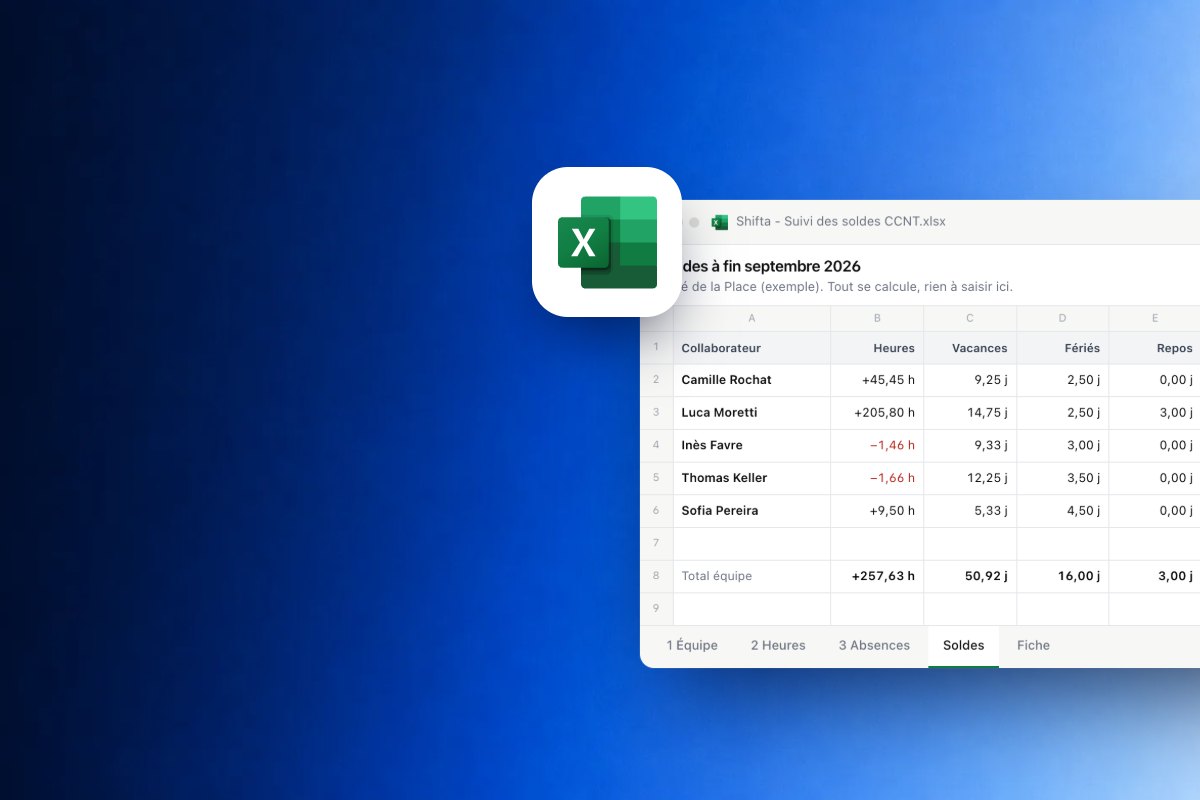
Free Excel template: track your team’s hours and holidays
A ready-to-fill workbook that works out the four L-GAV balances: hours, holidays, public holidays and rest days. Free, sent by email.

The best staff scheduling software in 2026
Seven tools compared for a Swiss venue, one price actually checked, and the three questions that settle it faster than any feature list.

Handling last-minute absences without spending an hour on your phone
A text at 16h20, a server off sick. The real cost is invisible: forty minutes lost on the phone, and a replacement nobody records.