Staffing a ski restaurant: planning a season the weather keeps rewriting

A mountain restaurant can serve 400 covers on Saturday and 40 on Tuesday of the same week, with the same team. That is normal, and it is why a schedule built the way a town restaurant builds one falls apart somewhere around mid-January.
Why a mountain restaurant is not a town restaurant with snow
Access is the first difference, and it is underrated. Staff arrive by lift. Someone who misses the 07h50 gondola is not ten minutes late, they are twenty-five minutes late at best. Extending a shift into the evening means arranging the way down, which is settled before the person leaves the valley, not at 21h with the terrace still full. A town restaurant can call someone at 17h and have them behind the bar at 18h. On a mountain the useful call happens in the morning or not at all.
The second difference is that the replacement pool is closed. In a resort it is the people already on the mountain or in staff housing, and most managers can name all of them in ten seconds. No agency, no local student available for one service.
The forecast is the staffing plan
A bluebird Saturday and a whiteout Saturday can differ by a factor of three. Sun fills a terrace that holds half the covers. Wind empties it in twenty minutes. Fresh snow keeps skiers out until 15h and then delivers everybody at once.
The practical answer is a week built in two layers: a base sized on the quiet version of the day, and a flexible margin decided 48 to 72 hours out when the forecast is finally worth trusting.
The second layer only works if the people in it are treated properly. Standby is a real constraint on a day off, so it needs to be named as standby and to get an answer at a fixed time. "We will let you know Friday", said three times and delivered late twice, is a reliable way to lose seasonal staff before March.
Twenty days carry the season, and the hours balance shows it
Christmas to 2 January, the February school holidays as they roll across cantons and neighbouring countries, the sunny March weekends. Mid-January is dead. Staffing evenly overstaffs eight weeks and understaffs the four that matter.
The result is an hours balance that swings hard: 55 hours in a peak week, 25 in mid-January. That is normal in a seasonal operation and harmless as long as the balance is visible to both sides while it accumulates.
Usually it is not. It lives in the manager’s spreadsheet, staff keep their own count in their head, and the two are compared for the first time in April, four days before everyone leaves the country. Confirming hours weekly turns the end-of-season settlement into arithmetic rather than a negotiation over memory.
A last-minute absence hits harder on a mountain
The question at 16h is not "who can come in". It is three at once: who is qualified for that post, who is not already working, and who is not already deep into overtime. The honest answer is four or five names, so the bottleneck is not the size of the pool. It is that every request travels through one person’s phone, one message at a time, while that person is also doing mise en place.
This is where offering a shift beats asking for one. If a cook who cannot make Saturday can put that shift in front of everyone qualified at once, and the first acceptance takes it, the problem resolves in fifteen minutes and the manager confirms rather than orchestrates. The same mechanism covers the sunny Thursday when an extra pair of hands would obviously pay for itself.
The question at 16h is not "who can come in". It is three at once: who is qualified for that post, who is not already working, and who is not already deep into overtime. The honest answer is four or five names, so the bottleneck is not the size of the pool. It is that every request travels through one person’s phone, one message at a time, while that person is also doing mise en place.
A note on tools
Three things matter more than any feature list. Staff read the current schedule on their phone between runs. A shift can be passed to qualified colleagues without the manager relaying every message. Hours worked are recorded and confirmed while the week is still fresh.
Shifta, the product behind this blog, was built around that shape of problem for small hospitality teams in Switzerland.
Whatever the tool, the season is short, the peaks are concentrated, and the team disperses the week it ends. Anything that leaves the operation dependent on one person’s memory is a risk that compounds every year.
Frequently asked questions
How far ahead can a mountain restaurant realistically plan?
In two layers. A base staffing level sized on the quiet version of the day can be published well ahead, and a flexible margin is decided 48 to 72 hours out, when the forecast is finally worth trusting. Trying to fix the whole week early means rebuilding it midweek anyway.
How should standby days be handled?
Name them as standby rather than leaving them as an informal expectation, and commit to answering at a fixed time. Being on call on a day off is a real constraint, and "we will let you know Friday", said three times and delivered late twice, is one of the more reliable ways to lose seasonal staff before March.
Is it normal for hours to swing from 55 to 25 across a season?
In a seasonal operation, yes, and it is harmless as long as the balance is visible to both sides while it accumulates. The problem is when it lives only in the manager’s spreadsheet and the employee’s head, and the two are compared for the first time in April. Confirming hours weekly turns the final settlement into arithmetic rather than a negotiation over memory.
Why is covering a shift harder at altitude than in town?
Because the replacement pool is closed and the travel is fixed. A town restaurant can call someone at 17h and have them behind the bar at 18h. On a mountain the useful call happens in the morning, since staff arrive by lift and the way down has to be arranged before they leave the valley.
Related articles
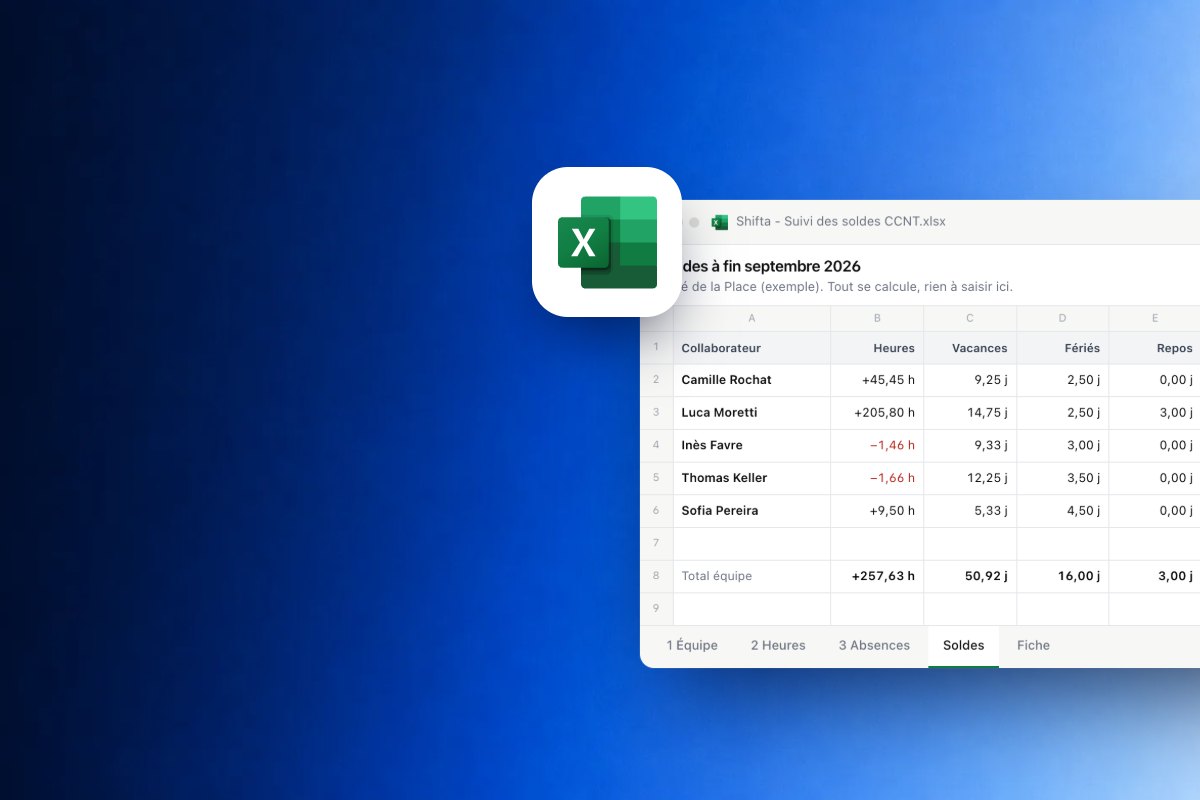
Free Excel template: track your team’s hours and holidays
A ready-to-fill workbook that works out the four L-GAV balances: hours, holidays, public holidays and rest days. Free, sent by email.

The best staff scheduling software in 2026
Seven tools compared for a Swiss venue, one price actually checked, and the three questions that settle it faster than any feature list.

Handling last-minute absences without spending an hour on your phone
A text at 16h20, a server off sick. The real cost is invisible: forty minutes lost on the phone, and a replacement nobody records.